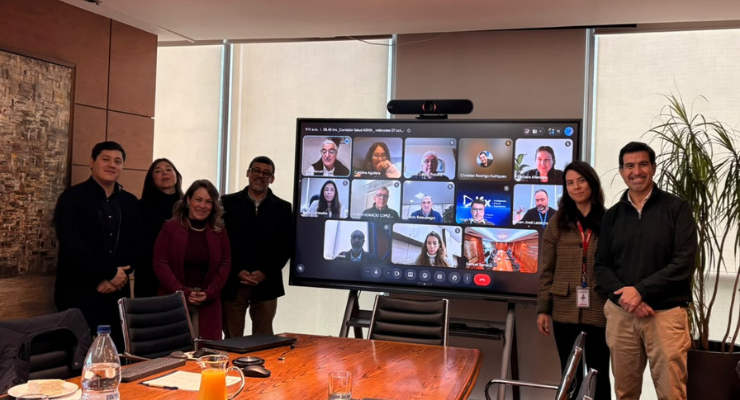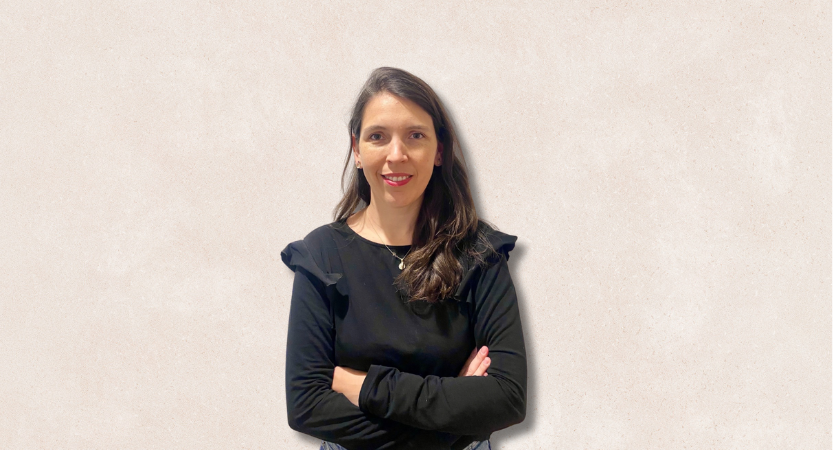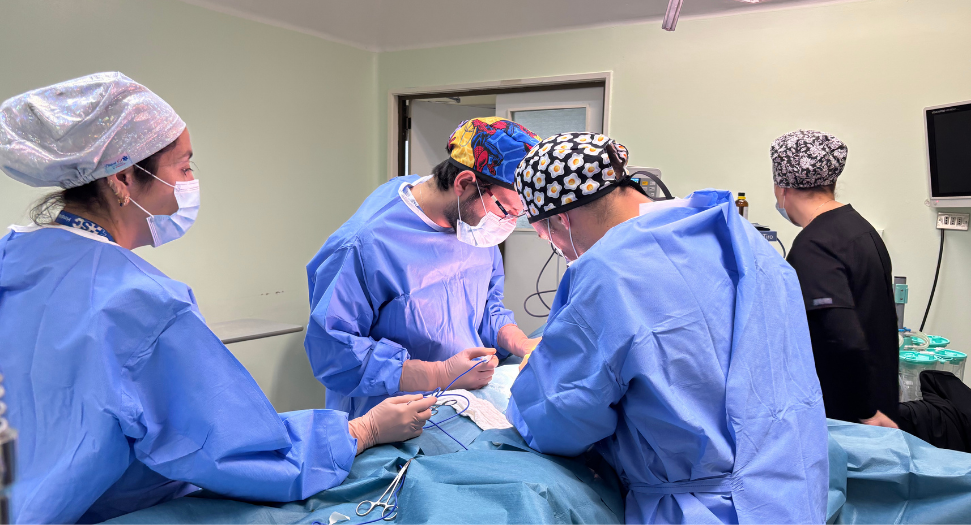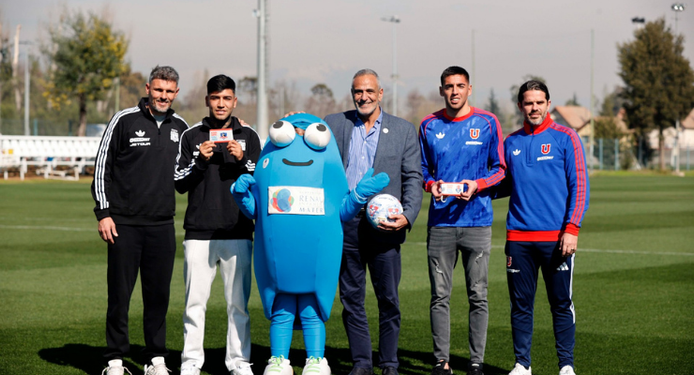
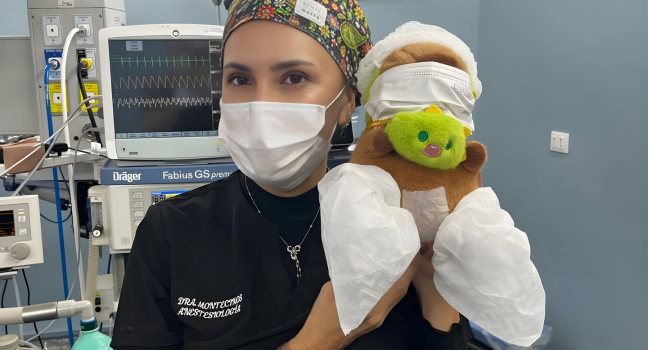
Anesthesiologist Virginia Montecinos has just completed ten operations as a volunteer at Corporación Mater. This number speaks to her perseverance, but above all, her conviction. We spoke with her to find out what motivated her to join, what she has learned along the way, and why, in her opinion, volunteering not only transforms the lives of children and their families, but also those who participate in it.
Do you remember what your first operation with Corporación Mater was like?
Yes, I remember it perfectly. Last year, I started collaborating with Corporación Mater through the Anesthesiology Society, which asked for volunteers. The first operation was in Rancagua, and I didn't know anyone. It was a great experience, and I really liked the atmosphere among all the volunteers. It's very standard work for a pediatric anesthesiologist, and we were able to provide excellent service, so I was very happy with everything.
Nurse Antonia Heusser, who is extraordinary, played a key role. We got along very well and stayed in touch; she kept me informed of the next operations, and so I joined in again and again.
What made you decide to volunteer?
When you are a medical specialist, it is very common to forget why you studied medicine in the first place. Over time, you get caught up in the routine: you work nonstop, the "machine" consumes you, and in Santiago, most specialists end up working in private clinics, far from the public system. Without realizing it, you gradually lose your way.
These operations, at least for me, mean returning to my roots, to the reason why I studied medicine: to help and serve. Furthermore, the contribution one makes is very small in personal terms—it's just one day's work—but the impact is enormous for the children, who often wait up to two years for surgery.
That's what motivated me at the beginning. And then something else came along: the human atmosphere that surrounds this cause, which is very powerful and very motivating.
In short, the goal of reducing waiting lists reconnects you with the meaning of the profession. And what's more, doing so is very rewarding in human terms.
When you talk about returning to your original motivation for studying medicine, what do you mean?
People enter medical school for various reasons: because they did well on the entrance exam, because they are good students, and because they have a vocation for service. This is true for all healthcare workers, not just doctors. But over the years, the system drags you along, and you end up working without stopping to think about why you do what you do.
I have discussed this with Dr. Escala, and he himself tells me: if we all donated one day of work per month, we would eliminate waiting lists. And it's true, because I go to an operation every 45 days, and the contribution I make is much greater than the effort it takes me.
In these 10 operations, what has sustained you over time to continue participating?
Mainly the atmosphere and the organization. They really care about the professional team: they make sure you can go, that you're comfortable, that your expenses are covered, that everything runs smoothly. That's really appreciated.
There is also the human connection. Antonia, for example, has been key for me; I am very fond of her and trust her completely. And when you see other colleagues—friends and acquaintances—joining in and feeling the same way, you realize that the experience is universally rewarding. We all come away with the feeling that we have done something worthwhile.
What is the most challenging aspect of volunteer work in the field, both professionally and personally?
Without a doubt, adapting. We go to hospitals we don't know, with very different realities, where sometimes they don't have all the resources we have in Santiago. As a volunteer, you have to adapt to local regulations, equipment, and available tools, and make do with what you have.
Furthermore, operations are not always requested directly by hospitals; sometimes they come from health services, and that can create a certain initial distance. There are places where the reception is different. But we have never had serious problems. We always manage to adapt, understanding that the important thing is the common goal. As the saying goes: when in Rome, do as the Romans do.
Is there any case, encounter, or story that has particularly marked you and that represents the meaning of these 10 operations?
What strikes me most, time and time again, is seeing children who have been waiting two years for urgent surgery. Two years. That speaks to a lack of capacity, operating rooms, specialists, and resources. In many regions, there are simply no specialists.
That's when you realize something very powerful: what we experience in Santiago is not the reality of the country. There are children who wait so long that, by the time they finally get to the operation, the condition has resolved itself because they have grown. And that is also a sign of everything that is not working as it should.
Looking back, what has this volunteer work taught you?
First, something that seems obvious but that we forget: Santiago is not Chile. Second, goodwill exists, but it must be exercised. Many doctors—myself included—get caught up in routine and don't take the time to stop, even if it's just one day every so often, to participate in something like this.
I have met some extraordinary volunteers, such as Dr. Cavallieri, a professor and teacher of anesthesia with a long career, who participates three or four times a year. She always says, "You have to come and volunteer every so often." And she's right. On the other hand, I see few young doctors joining, and I think that's a challenge.
For me, there is a before and after. This year of volunteering had a profound impact on me, and I plan to continue. It doesn't cost me anything, really. Sometimes it means staying overnight, other times I can go home the same day. But the impact is so great, and the meaning so clear, that everything else takes a back seat.
What would you say to other healthcare professionals who are considering volunteering but are still undecided?
Don't be afraid. The unknown often paralyzes us. As doctors, we must remember that our main role is to serve people, especially those who live outside Santiago, where there is a dramatic shortage of specialists.
There are regions where there is only one pediatric surgeon, for example. If each of us devoted one day every so often to treating these children, the results would be completely different. We would not have waiting lists like the ones that exist today.
Any message you would like to add?
I would just like to thank Corporación Mater for giving me this opportunity. It is a deeply rewarding experience. Honestly, I feel that I receive more than I give. I enjoy every operation, and I return with a full heart and lots of energy. It is incredible how much can be achieved by doing, apparently, so little.