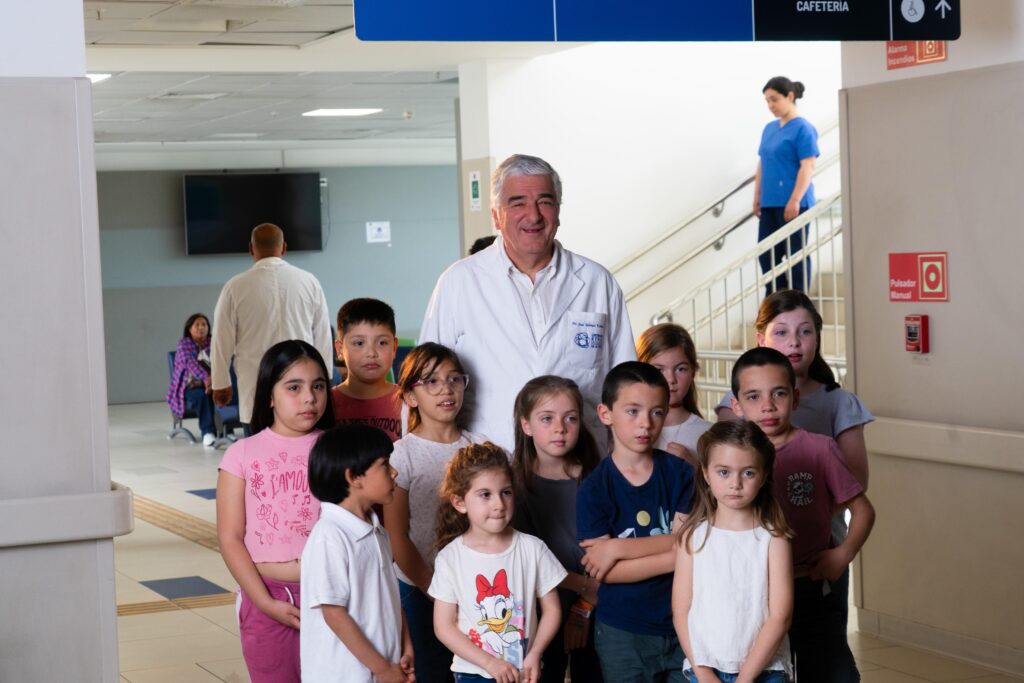
Dr. José Manuel Escala is the founder and president of Corporación Mater. As the organization marks its 30th anniversary, we sat down with him to discuss its origins, its major achievements, and the need to carry this work forward—a conversation in which he also acknowledges and thanks those who have played a vital role along the way.
What inspired you to create Mater?
I’ve always had a strong social conscience. It stems from my upbringing, my family life, and the experiences I’ve had since I was young. I’ve always felt that service is an important part of life, and that people are happier when they give than when they receive.
I wanted to study medicine from a very young age because it’s a concrete way to help others. And over time, that idea began to take shape. I remember that, at various points in my life—whether I was traveling or working—I would think that someday I would start a foundation.
In London, for example, I saw how people came together to raise funds for specific causes. At one hospital, they had a kind of progress bar showing how much more was needed to purchase a piece of equipment. Everyone did their part to contribute. That really made an impression on me.
And then, in Chile, while working at Exequiel González Cortés Hospital, I witnessed a reality that really struck me: patients waiting months to get a critical test, while at a private clinic the same issue could be resolved in just a few days. At that moment, I clearly saw that there was a real problem, and I felt compelled to do my part.
If you had to explain to someone in one sentence why Mater exists, what would you say?
Mater exists because there is a need. Because everyone should have access to quality, timely care, and in many cases, for various reasons, that is not the case.
We won't be able to solve everything, but we can help ensure that children get there on time. In medicine, timely diagnosis is key. If you're too late, the damage is often already done.
The idea is to level the playing field
What were the corporation’s early days like? What was the biggest challenge back then?
Once I’d made up my mind, I called a group of friends and family members, and they all agreed. That’s how we got started. We had very few resources, but we were determined.
We organized bingo games, auctions, and various other fundraising activities. My wife, Soledad, played a key role during that time with her dedication and perseverance. Little by little, we saw that there was interest, that people were connecting with the children, and that this could grow.
The hardest part was securing funding. I made hundreds of calls. Many of them didn't pan out, but every time someone said yes, we felt a new sense of energy to keep going.
Over time, we managed to build a polyclinic within the hospital, purchase equipment, and later construct the Diagnostic Center. That took years.
Who played a key role in that early stage?
There were many volunteers. Radiologists who worked for free, people who helped with management and administration. My family was also very important. Friends and acquaintances who contributed resources were key as well. I am deeply grateful to all of them.
We later streamlined the operation, but in the beginning, it all came about thanks to the dedication of a group of caring and generous people.
Of everything Mater has done, which achievement moves you the most when you think back on it?
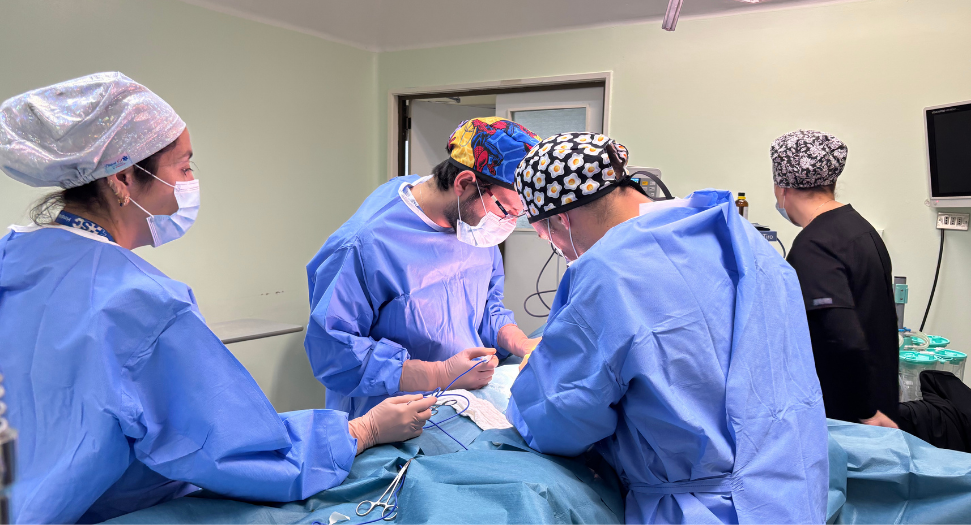
I'm a surgeon, and for me, there's something deeply meaningful about being able to do what we know how to do and put it to use for others. Seeing a patient leave the operating room in good condition is something that always genuinely moves me.
It's not a specific achievement. It's more of a feeling. I like it when the center is full, when there are patients, when you can see that what you're doing makes a difference.
And during these operations, seeing the grateful families is also very moving and heartening because it gives meaning to these thirty years of perseverance, often against the odds.
How would you describe the current state of pediatric urology in Chile?
There is still significant inequality in access. It depends greatly on the region and the context.
There are medical conditions that, if diagnosed early, can be treated easily. But when that doesn’t happen, they can turn into complex, chronic, and much more costly problems.
That is why it is so important to strengthen primary and secondary care, so that the most critical cases can be detected early and referred appropriately. Not every case needs to be referred to a specialist immediately, but it is essential to be able to identify those that require urgent care.
What role have companies played in the history of Mater?
Businesses have been essential. This cannot be sustained without resources.
We’ve been fairly low-key about what we do, because we’ve prioritized our work over visibility. But when companies learn about our results—the children we’ve helped, the surgeries we’ve performed, the wait times we’ve managed to reduce—they respond with great enthusiasm. There’s a genuine sensitivity in the private sector, especially when it comes to children’s health.
Your support makes it possible for this work to exist, grow, and reach more patients. In that sense, your role is essential.
What would you say to a company that is considering supporting a cause like this?
I would tell them that there is a very direct impact on health. In these cases, moreover, the contribution has a tangible effect: it allows for timely intervention. And that completely changes the course of a child’s life.
From an economic standpoint, this is also clear. Treating a condition early on prevents much higher costs down the road. But beyond that, there is the human aspect.
You don't have to wait until your child gets sick to understand
This year, Mater is celebrating its 30th anniversary. What does reaching this milestone mean?
It's a mix of satisfaction and responsibility.
When you look back, you see what has been built, but also what is still missing. This has required a great deal of effort and perseverance.
It is also important that Mater continue to care for children in need and that this not depend on a single person.
After all these years, what factors have been key to keeping Mater going?
Perseverance, without a doubt. And also friendship, trust, and solidarity. This is something we all build together.