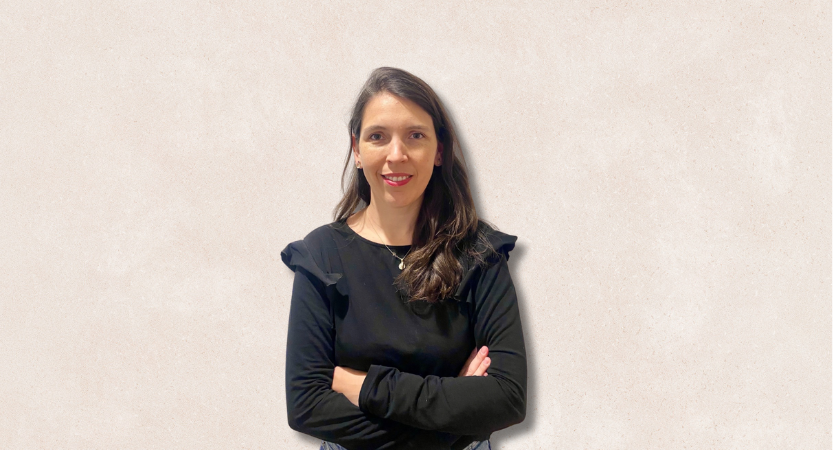
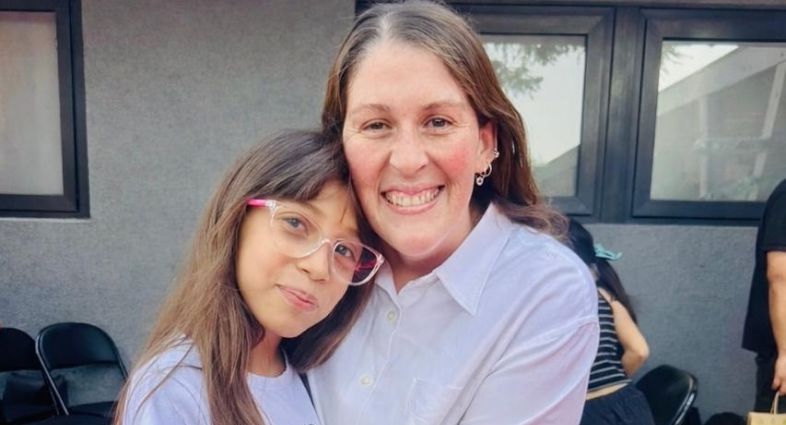
For the past four years, Constanza Olivares has been the coordinator of highly complex surgical operations carried out by the MATER Corporation throughout Chile. A nurse and midwife by profession, she speaks of her work with conviction and gratitude: "The Corporation has allowed me to develop not only professionally, but also to provide more care to patients. And that, for me, is tremendously satisfying."
How would you define a highly complex MATER operation?
I would say that it is an activity where we need expert minds, caring hands, and great teamwork to achieve a better quality of life for children and their families.
Tell us what highly complex operations consist of.
The highly complex procedures we have been performing since 2013 address nephrourological conditions that require delicate surgeries and, therefore, subspecialists with the expertise and appropriate management skills. They include procedures such as complex hypospadias, nephrectomies, pyeloureteral obstructions, and other anatomical and functional disorders of both the bladder and kidneys.
They are called highly complex because they require highly specialized pediatric urologists and, in many cases, hospitalization for several days to monitor progress and prevent complications.
Unlike low-complexity operations, where we can operate on 20 or 25 children in two days, here we treat between 6 and 8 patients, because each surgery requires more time, dedication, and follow-up.
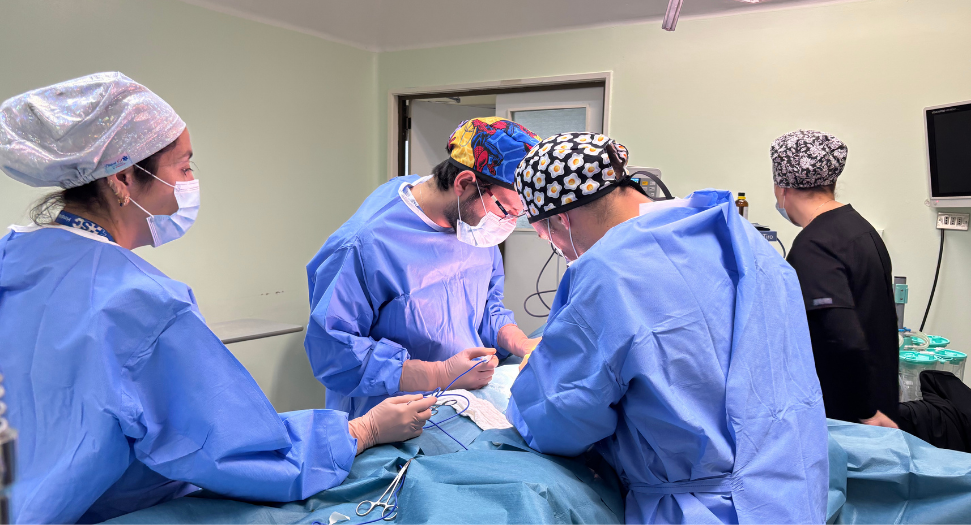
Furthermore, they are not only surgical. They also include interdisciplinary professional care. In places such as Coyhaique, for example, with whom we have a collaboration agreement, we work with a pediatric surgeon, pediatrician, and physical therapist from the hospital. A volunteer team also participates, consisting of pediatric urologists, pediatric nephrologists, pediatric physical therapists, and myself, who specializes in the management of pediatric incontinence. We coordinate additional tests when necessary and, in some cases, use our Diagnostic Center and Shelter to accompany patients.
The work begins at least one month in advance. We review clinical cases with the local team, evaluate tests, suggest additional studies if necessary, and determine the best surgical or therapeutic approach. It's not just about coordinating volunteers: it's about technical evaluation, detailed planning, and follow-up.
What types of conditions are treated?
We group them into three broad categories: genital, bladder, and kidney.
In the genitals, we see disorders such as hypospadias and epispadias.
In the bladder, we address neurogenic bladder and other pathologies that affect continence, including surgeries such as Mitrofanoff or bladder enlargements.
And in the kidneys, we treat anatomical and functional alterations of the kidney and ureters, such as obstructions or malformations, for example, horseshoe kidney.
What is your role in these operations?
My role is to lead and manage each operation. We work with a "pilot doctor," who leads the process at the local level and liaises with us.
I coordinate the review of clinical cases, follow up on pending tests, identify the needs of the local team, and manage dates, operating rooms, accommodation, and transportation for the volunteer team. We also coordinate the participation of pediatric urologists, pediatric nephrologists, and other professionals when necessary.
But beyond logistics, we always have a clear goal: that patients can be treated in their own region and do not have to travel far from home, with all the stress that this entails for the family.
How is the region where operations are carried out chosen?
Contact is usually initiated by the local medical team, either through personal connections or via the website. They refer patients who require highly complex surgery to us, and the cases are evaluated by our medical director, Dr. Escala, who analyzes the technical feasibility before proceeding.
What logistical challenges do you face?
Resources are always limited to meet demand. Unlike low-complexity procedures, whose costs are sometimes covered in full or in part by health services, in high-complexity procedures the costs are borne entirely by the Corporation.
We have the support of Sky Airlines and Vitacura Aerodrome for most of our transfers, but coordinating travel, equipment, and schedules always presents challenges.
That said, the volunteer team is very committed. We are all very determined, we adapt and look for solutions to make the operation a success. I see it as an opportunity to build resilience.
How would you describe the teams participating?
They are deeply committed professionals. Pediatric nephrologists and urologists are not only concerned with surgery, but also with the family context. They know that many of these patients have waited years without access to a specialist.
What motivates them is not only performing the surgery, but improving the life of the child and their family.
In addition, they share MATER's goal of strengthening children's renal and urological health. And the work environment is very collaborative and warm. Although we are dealing with complex situations, we are able to work with enthusiasm, closeness, and a great deal of humanity.
What does it mean for a family to have access to highly complex surgery in their region?
It's a huge relief. Being able to be hospitalized without traveling to Santiago completely changes the experience. It allows the family to maintain their routine, parents to take turns, and other children to not be neglected.
It greatly reduces stress.
Some children require more than one surgery, and we grow up with them. Seeing them evolve, go to school without worries, and live their normal lives is very meaningful.
And for you personally, what does managing these operations mean?
It brings me deep joy. In the area of pediatric incontinence, for example, when a child we have treated manages to stay dry, play calmly, and go to a birthday party without fear, I feel truly satisfied.
Working with children has always been important to me; it's like being on another planet. And at MATER, I've been able to develop what is at the heart of nursing: care. Not only from a clinical perspective, but also in terms of accompanying and welcoming the child and their family.
Seeing them live normally is what fills my heart with joy.